Hardware for Modbus RTU (RS-485) and Modbus TCP (Ethernet)
Hardware
The hardware needed for the Modbus communication for any type of Industrial Shields PLC depends on the version used, as Modbus RTU uses RS-485 and Modbus TCP uses Ethernet.
Modbus RTU
The hardware required for Modbus RTU communication includes twisted-pair cables and RS485-compatible serial ports. Each device involved (such as PLCs, sensors, or actuators) must have RS485 ports, typically labeled as A+ and B-, to connect to the network. The A+ and B- lines are used to establish differential signaling for robust and noise-resistant communication over long distances. Additionally, termination resistors may be required at the ends of the network to prevent signal reflections.
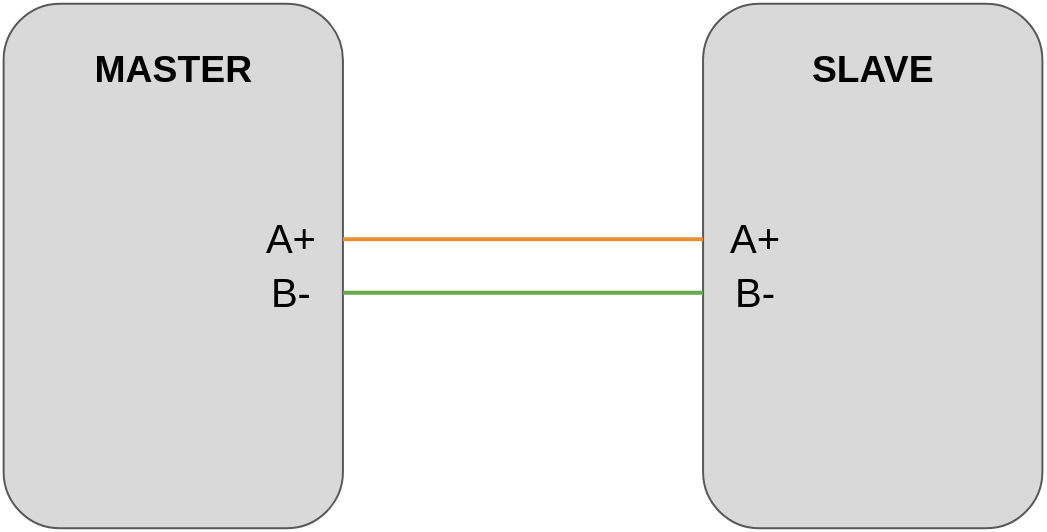
To use Modbus RTU with an Industrial Shields PLC, connect A+ with A+ and B- with B- as shown in the following figure:
Make sure to enable RS-485 communication on the PLC using its switches if needed. Refer to the User Guide and Technical Features of your PLC for further information.
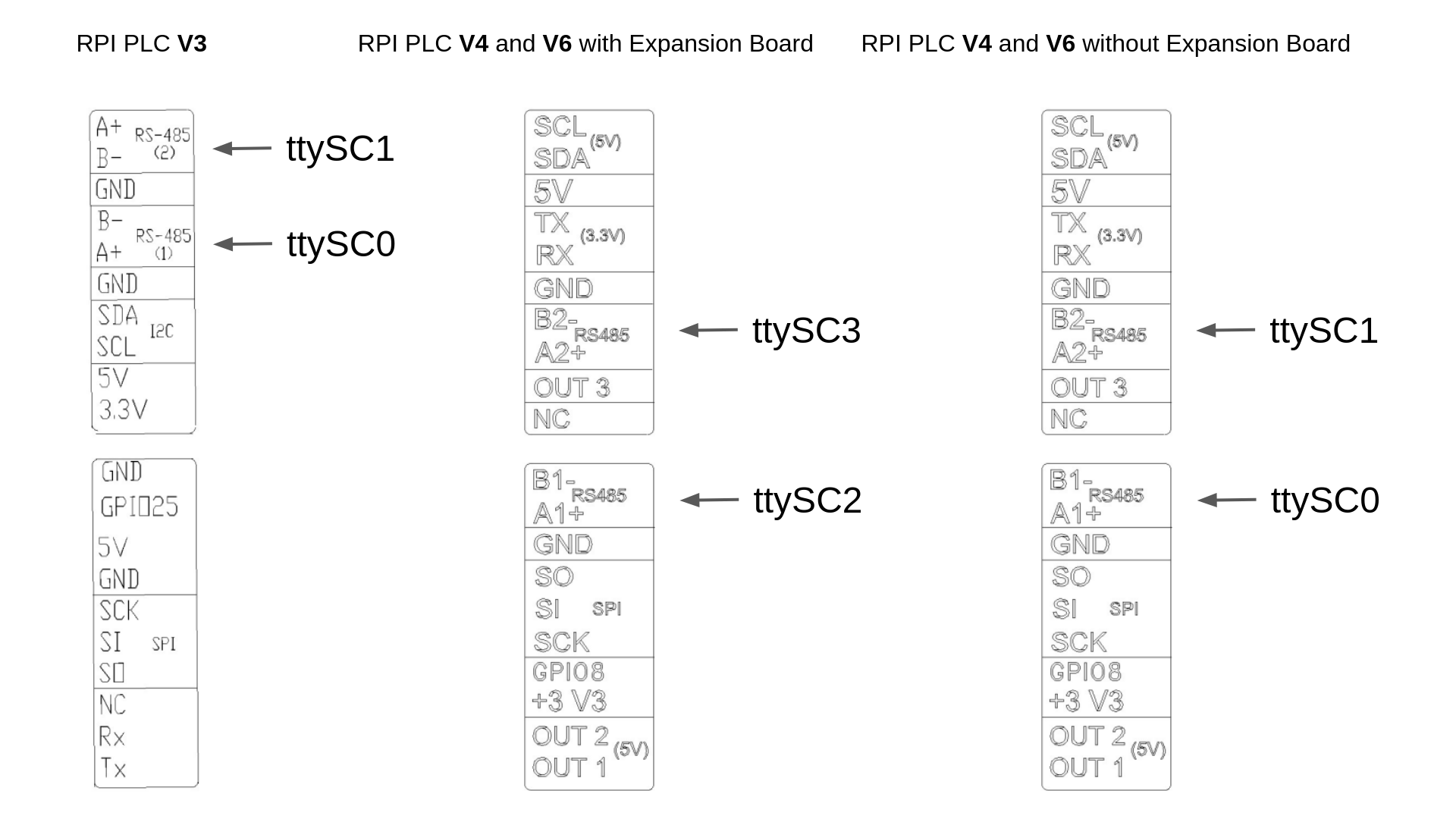
Make sure to initialize the corresponding RS-485 port depending on your RPI PLC and port physically used as you can see in the following figure:
Modbus TCP
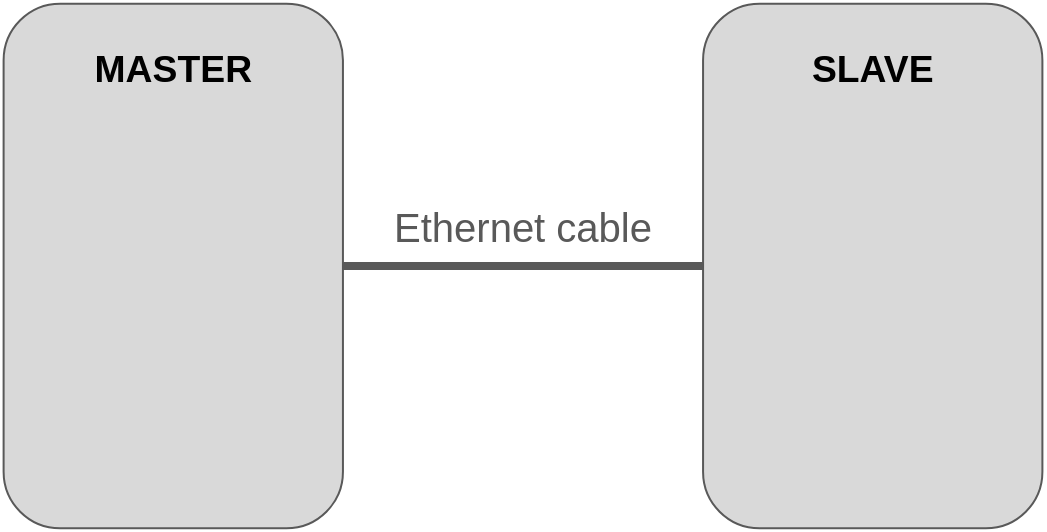
Modbus TCP is a version of the Modbus protocol that operates over Ethernet networks. The only hardware required for Modbus TCP communication is an Ethernet
cable. Each device involved (such as PLCs, sensors, or actuators) must
have an Ethernet port to connect to the network.
The only PLCs from Industrial Shields that do not have an Ethernet port
are the Ardbox Analog PLC and Ardbox Relay PLC. In case of having an
Ardbox PLC, it is recommended to use Modbus RTU.
There are no comments for now.
to be the first to leave a comment.