Success story · SIRA · SI-WINE
Wine fermentation. Every tank in its range.
SI-WINE by SIRA keeps each tank at its own temperature, with no one on watch.
A fermentation that goes wrong may not be saved.
SI-WINE watches every tank, and cools the one that needs it.
SIRA is a technology company from Andorra and a technology partner in robotics, PLCs and artificial intelligence. Its SI-WINE solution controls the fermentation of wine: the software is from SIRA, and the control unit runs on Industrial Shields hardware, an M-Duino PLC that acts on the cooling and a 7-inch TouchBerry Pi panel PC. Wireless probes inside the tanks send the temperature, and the system opens the jacket valve of each tank and runs the cooling machine. The case does not publish the winery or the number of tanks installed. The screenshots show the set points of a four-tank demo; the values in the simulations are examples.
From the project
The partner, the cabinet and the screens.
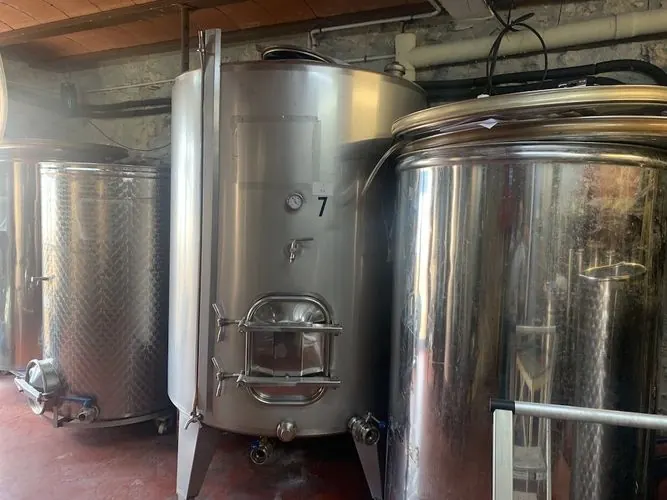
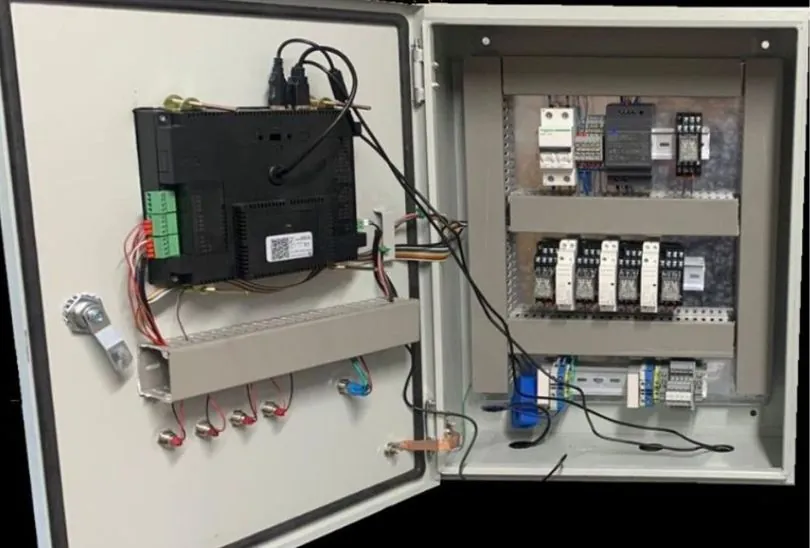
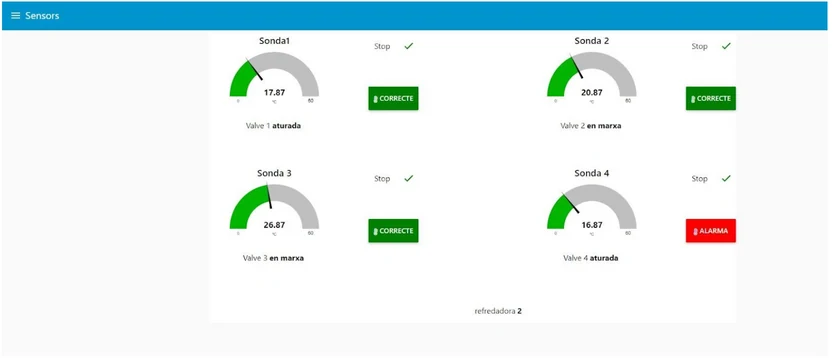
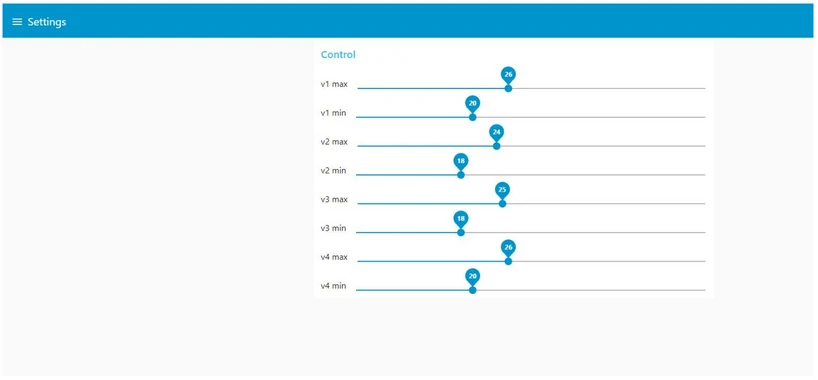
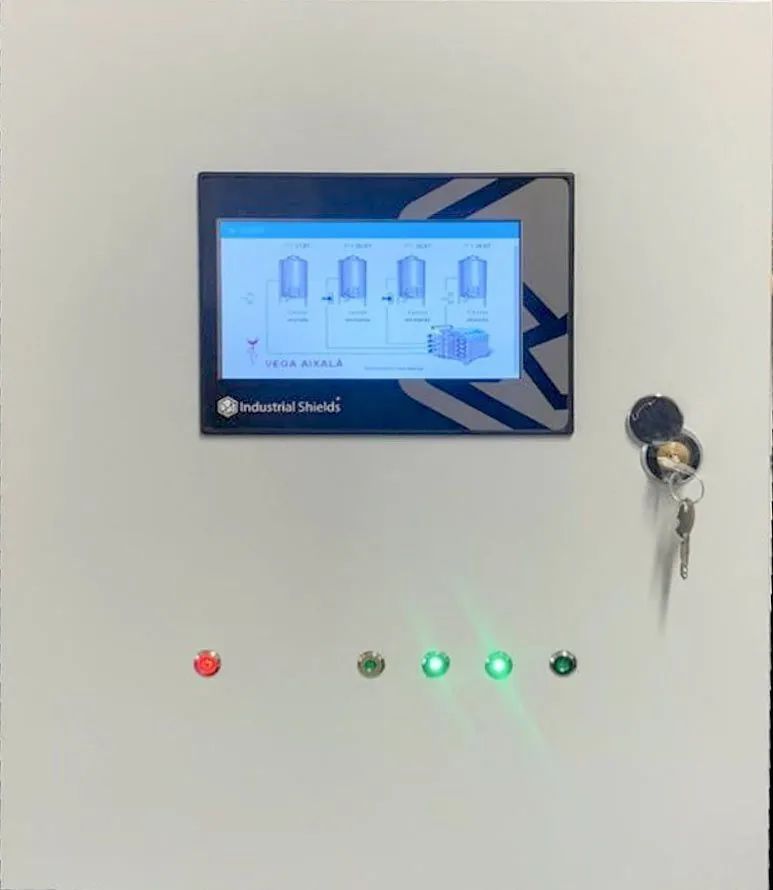
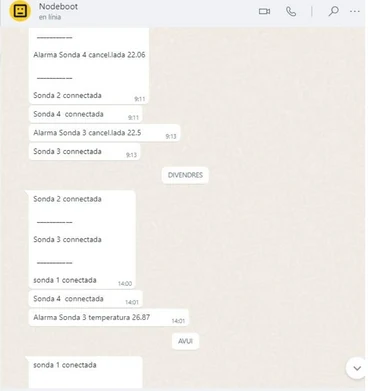
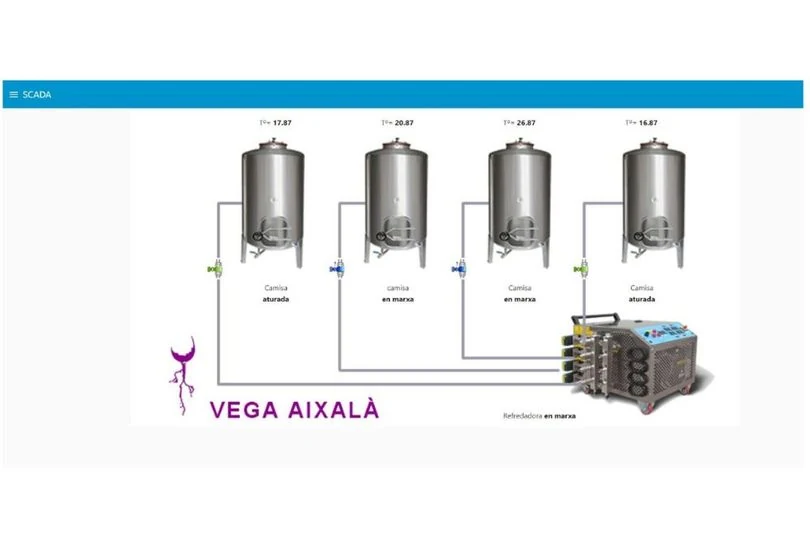
Photos and screenshots from the original SI-WINE case. The screens are in Catalan.

The partner: SIRA, a technology company from Andorra. It develops SI-WINE and runs it on Industrial Shields hardware.
The challenge
Keep each tank in range, day and night.
Fermentation is a key part of wine production: it decides the quality and the taste of the final product. To make it run without incidents, the winery needs a precise and reliable control system. The difficulty is that the key indicators must be monitored all the time, to prevent unexpected or unwanted results. And when something goes wrong, the damage to the wine can be irreversible.
Measure inside the tank
The temperature must come from inside each tank, from probes that can be in contact with the wine.
Limits for each tank
Each tank can hold a different wine, so each one needs its own temperature limits.
Cool without empty runs
The cooling machine must only run when a cooling circuit is open.
Know at once
A failed valve, a fault in the cooling machine or a bad probe must reach the team at once.
A record of every fermentation
All tank temperatures are logged, and the data exports to a CSV file that opens in Excel.
How it works
Three jobs: the limits, the cold, the alerts.
Each stage shows one part of the system. Move the sliders and press the buttons. The panels are illustrative simulations: the temperatures, the power of the cooling machine and the times are examples, not data from the winery.
Each probe has its own maximum and minimum.
Wireless probes inside the tanks send the temperature every 2 minutes. The controller checks each reading against the limits of that probe and, when needed, opens the solenoid valve of that tank's cooling jacket. Because the limits are set per probe, tanks with different wines are controlled independently. Pick a tank and move its temperature.
- Wireless probes, Wi-Fi or LoRa
- A maximum and a minimum per probe
- One jacket valve per tank
Illustrative simulation. Example values, no data from the winery. Limits taken from the settings screenshot: tank 1 from 20 to 26 °C, tank 2 from 18 to 24 °C, tank 3 from 18 to 25 °C, tank 4 from 20 to 26 °C. Rule: the jacket valve opens above the maximum and closes at the minimum. The probe screenshot shows it: tank 2 at 20.87 °C keeps its valve open until it reaches its minimum.
The cold only runs when a circuit is open.
The control unit has the connections for the solenoid valves of the tank jackets and for the cooling machine. It switches the cooling machine on and off by the open valves, so there is always a working circuit and the machine never runs empty. It also tracks the energy use of the fermentation, so the winery knows its energy cost. Open and close the valves.
- A solenoid valve per cooling jacket
- Cooling machine on only with an open circuit
- Energy cost of each fermentation
Cooling events (example)
Illustrative simulation. Example values, no data from the winery. Example power of the cooling machine: 4 kW. The case says that the control unit switches the cooling machine on and off by the open valves, so there is always a working circuit, and that it tracks the energy cost of the fermentation. It does not publish the machine or how the energy is measured.
A fault reaches the phone. Every reading goes to the record.
When something can break the temperature control, SI-WINE sends an alert by email, Telegram or WhatsApp: an error in a solenoid valve, a fault in the cooling machine or a probe that does not work. It also warns when a probe battery must be charged. Every 5 minutes it records all the temperatures, and the data exports to a CSV file for Excel. Cause a fault and log the data.
- Email, Telegram or WhatsApp
- Valve, cooling machine and probe faults
- A record every 5 minutes, CSV for Excel
Alerts and records (example)
Illustrative simulation. Example values, no data from the winery. Example: four tanks and an alert to the three channels. The case says that alerts go out by email, Telegram or WhatsApp, and that the temperatures are recorded every 5 minutes and export to CSV. The fields of the file are an example.
System architecture
How does SI-WINE control the temperature of each fermentation tank?
Wireless probes inside the tanks send the temperature every 2 minutes over Wi-Fi or LoRa. The control unit has two parts: a 7-inch TouchBerry Pi panel PC that runs the SI-WINE dashboard and processes the data, and an M-Duino 42 PLC that acts on the cooling, the solenoid valve of each tank jacket and the cooling machine. The dashboard opens from any device, and alerts go out by email, Telegram or WhatsApp. The control units are Modbus compatible, so they can join other SCADA systems. Each unit controls up to 32 tanks, and several units work side by side. The case does not publish how the panel PC and the PLC are linked or how the outputs are wired.
| Signal | Between | Type | Purpose |
|---|---|---|---|
| Tank temperature | BetweenProbe in the tank → control unit | TypeWireless, Wi-Fi or LoRa | PurposeA reading every 2 minutes, 24 hours a day |
| Probe battery | BetweenProbe → control unit | TypeWireless | PurposeWarn when a battery must be changed or charged. A charge lasts 2 weeks |
| Jacket valve | BetweenM-Duino PLC → solenoid valve of each tank | TypeDigital out (example) | PurposeCool a tank that goes above its limit. The case does not publish the wiring |
| Cooling machine | BetweenM-Duino PLC → cooling machine | TypeDigital out (example) | PurposeOn and off by the open valves, never with all valves closed |
| Limits | BetweenDashboard → each probe | TypeSet point | PurposeA maximum and a minimum per tank |
| Energy use | BetweenCooling → control unit | TypeNot published | PurposeEnergy cost of each fermentation |
| Alerts | BetweenControl unit → team | TypeEmail, Telegram, WhatsApp | PurposeValve error, cooling machine fault, probe failure, high or low temperature |
| Record | BetweenControl unit → CSV file | TypeFile | PurposeAll temperatures every 5 minutes, opens in Excel |
| Integration | BetweenControl unit ↔ other SCADA | TypeModbus | PurposeEnergy efficiency, presence control or lighting |
Why it works
The software knows the wine. The hardware knows the cabinet.
Partner software, industrial hardware
SIRA writes SI-WINE. The control unit runs on an M-Duino PLC and a TouchBerry Pi panel PC, built for a control cabinet.
Limits per tank
Each probe has its own maximum and minimum, so different wines ferment side by side.
No empty runs
The cooling machine follows the open valves. There is always a working circuit.
Probes for the wine
Stainless steel probes with silicone-protected cable can be in contact with the wine. Range: -55 to 125 °C.
Open to other systems
The control units are Modbus compatible and can join other SCADA systems for energy, presence or lighting.
Grows by units
Up to 32 tanks per unit, and several units work side by side without conflicts.
Hardware used
One PLC for the cold, one panel for the people.
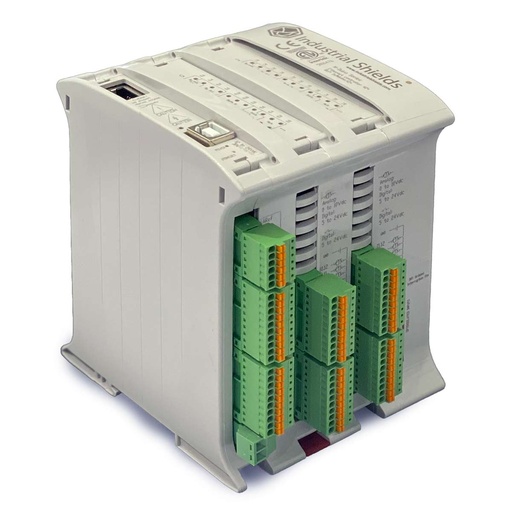
M-DUINO ETHERNET PLC ARDUINO 42
An industrial PLC built around an original Arduino Mega 2560, with Ethernet, RS-485 and RS-232, for DIN rail. It is programmed with the Arduino IDE. In SI-WINE it is the control unit that acts on the cooling system: the solenoid valves of the tank jackets and the cooling machine. The case does not publish which outputs are used or how they are wired.
- Role
- Jacket valves and cooling machine
- Inputs
- 26: 12 analog/digital (0-10 V, 10-bit), 14 digital optoisolated (5 to 24 Vdc), 4 with interrupt
- Outputs
- 16: 6 analog/digital/PWM (0-10 V), 10 digital optoisolated (5 to 24 Vdc)
- Communications
- Ethernet (W5500, RJ45), RS-485, RS-232, TTL serial, I2C, SPI
- Built in
- Real-time clock, microSD slot
- Programming
- Arduino IDE
- Power supply
- 12 to 24 Vdc
- Mounting
- DIN rail TS35, IP20, inside a cabinet
The case names it M-Duino PLC Arduino 42+. It is in the catalogue today as the M-DUINO ETHERNET PLC ARDUINO 42, reference IS.MDuino.42+. Its digital outputs are optoisolated, 5 to 24 Vdc: solenoid valves and the cooling machine switch through interface relays or contactors sized for the load. The photo of the open cabinet shows relay modules on the DIN rail. With 32 tanks, the jacket valves need more outputs than the 16 of one M-Duino 42, through expansion or remote I/O. The case does not publish how they are wired.

TouchBerry Pi Panel PC 7" CORE
An industrial panel PC: a Raspberry Pi 4 behind a 7-inch capacitive touchscreen, with Gigabit Ethernet, 10 I/O of its own and a UPS for a safe shutdown. In SI-WINE it is the screen to monitor and control the system, and it processes and analyses the data of the probes.
- Role
- SI-WINE dashboard, data processing
- Display
- 7-inch IPS, 1024 x 600, capacitive touch, 900 nits
- Computer
- Raspberry Pi 4, 4 GB RAM (CORE)
- Inputs and outputs
- 3 digital in, 2 analog in (0-10 V or 4-20 mA), 5 digital out
- Communications
- Gigabit Ethernet, USB 2.0 and 3.0, one serial port (RS-485, RS-232 or TTL)
- Built in
- UPS with supercapacitors, real-time clock
- Power supply
- 12 to 24 Vdc, 28 W
- Front
- IP20 (CORE)
The case used a 7-inch TouchBerry Pi Panel PC and does not publish its version. Today the 7-inch model comes as CORE, the standard configuration, or as FLEX, with more RAM, an IP65 front or one expansion board (LoRa, 4G or CAN).
Questions about this project
What is SI-WINE and who makes it?
SI-WINE is a solution to monitor and control the fermentation of wine. SIRA, a technology company from Andorra, develops it. The control unit runs on Industrial Shields hardware: an M-Duino PLC that acts on the cooling and a 7-inch TouchBerry Pi panel PC that shows and processes the data. The original case lists a ready-to-connect electrical panel with the PLC, the panel PC, a DIN rail power supply and a 2-pole 10 A circuit breaker, plus the probes and the SI-WINE dashboard.
How does SI-WINE keep each fermentation tank at its temperature?
Each probe has its own maximum and minimum temperature. The controller checks every reading and, when needed, opens the solenoid valve of that tank's cooling jacket and runs the cooling machine. Because the limits are set per probe, tanks with different wines are controlled independently. The screenshots show the logic: the jacket valve opens above the maximum and closes at the minimum, so the valve does not switch too often.
Why does the cooling machine depend on the open valves?
The control unit takes the open valves into account to switch the cooling machine on and off. This way there is always a working circuit, and the machine never runs with every jacket closed. SI-WINE also tracks the energy use of the fermentation, so the winery knows its energy cost.
Which probes does SI-WINE use, and how often do they report?
Wireless probes that work over Wi-Fi or LoRa. They give the temperature every 2 minutes, 24 hours a day, on rechargeable batteries that last 2 weeks, and the system warns when a battery must be changed or charged. They are food grade: stainless steel probes with silicone-protected cable, with a range of -55 to 125 °C.
Which alerts does it send, and how is the data recorded?
Alerts go out by email, Telegram or WhatsApp for any problem that can break the temperature control: an error in a solenoid valve, a fault in the cooling machine or a probe that does not work. The dashboard also shows high and low temperature alarms. Every 5 minutes the system records all the temperatures, and the data exports to a CSV file that opens in Excel. For the same techniques on Industrial Shields hardware, see CSV logging with a live history table and Telegram alerts and remote control.
Can SI-WINE grow with the winery or connect to other systems?
Yes. Each control unit controls up to 32 tanks, and several units can work side by side without conflicts. The control units are Modbus compatible, so they can join other SCADA systems to control the energy efficiency of the site, presence control or lighting. For a Modbus map on an M-Duino PLC, see a Modbus TCP register map for a plant.
Download the case study
4-page PDF with the challenge, the logic, the architecture and the hardware. No form required.
Similar project?
Tell us what you must keep in range.
Tell us how many tanks or zones you control, what you must measure, what must switch and who must get the alerts. We will tell you which controller and panel fit and how to connect them.
- You get an answer from our technical team
- I/O count and controller sizing for your project
- Arduino, ESP32 or Raspberry Pi based PLCs