Case study · Refrigerated fleet · Ardbox Analog
Frozen goods on the road. One unit tracks the cold.
GPS and goods temperature on every truck, sent over GPRS to the data centre.
Frozen food must stay cold on every route.
One unit on each truck measures it and sends it.
This case comes from a company that processes, sells and distributes frozen food. It does not name the customer. This page is about the cold chain and the onboard unit: the goods temperature, the position, the data kept on board and the data sent over GPRS. The same project has a second page about route efficiency, and a separate case study shows a GPS, GPRS and Bluetooth tracking architecture.
The challenge
Guarantee the product. Improve the fleet.
The vehicle fleet of the customer grew a lot over the last decade. To keep its competitive level, the company had to guarantee the quality of the product and, at the same time, improve fleet management with new technology. Three needs came together: the business strategy, the regulations on the cold chain for this type of goods, and the control of working hours required by law.
Cold chain rules
Frozen goods travel under regulations on the cold chain. The fleet must follow them on every route.
Product quality
Quality must be guaranteed. The company keeps its commitment to the highest quality with its customers, in a sector as sensitive as food.
Many door openings
Local routes make many stops. Every stop can mean an opening and a closing of the trailer.
Working hours by law
The law requires the control of working hours. Fleet data can complement the records of the working day.
Data the customers can use
One improvement the company plans: share the real-time position of the vehicles and the temperature of the load with its own customers.
How it works
Three loops: measure, send, size.
Each loop shows one part of the onboard unit. Press the buttons and move the sliders. The panels are illustrative simulations: temperatures, limits, times, record rates and signals are examples, not data from the fleet.
The temperature of the load, with the position of the truck.
The priority of this project is the GPS positioning and the temperature of the goods. In the first test, the cold chain was not threatened in any case. The test ran at the end of summer: temperatures may not be very severe then, but the cold margin was still very wide. In the panel, open the trailer door and change the outside temperature. A typical way to do it: an alarm when the load stays above a limit for a set time, sent with the position.
- Goods temperature and GPS position on the same unit
- Many stops and door openings on local routes
- Cold chain not threatened in the test, at the end of summer
Unit events (example)
Illustrative simulation. Example values, no data from the fleet. Example: set point −22 °C, alarm when the load stays above −18 °C for 2 minutes. One step of the panel is 5 seconds.
A temperature record for every load, and an alarm when it matters.
The project defined which data the unit saves locally and which data it sends through GPRS to the data centre, for analysis and decisions in real time. Most of the data is sent. The case does not publish the split or where the local data is kept. For a cold chain, a typical way to do it: every reading carries the time, the temperature and the position, so the record shows what the load lived on each route, and an alarm goes out at once when the load warms up. In the panel, make a long stop with the door open.
- Data saved locally on the vehicle
- Most of the data sent over GPRS to the data centre
- Example: time, temperature and position on every record
Temperature record (example)
Illustrative simulation. Example values, no data from the fleet. Example: one record every 5 minutes with the time, the load temperature and the stop. Alarm when two records in a row are above −18 °C.
Size the inputs and outputs once. Leave room to grow.
After analysing the requirements, the team checked which Arduino PLC best suits the number of inputs, outputs and accessories, and defined one standard product for the whole fleet: the Ardbox Analog GPRS with GPS, from the 20 I/Os family. Its inputs and outputs meet the needs of the customer and allow growth later without changing the installed hardware. In the panel, add signals and see what is left.
- One standard product, installed in the whole fleet
- 10 inputs and 10 outputs on the Ardbox Analog
- Room for new signals without new hardware
Illustrative simulation. Example values, no data from the fleet. Example signal list. The case does not publish the signals it wires. In this example, the GPS and the GPRS modem are not counted as I/O. The case does not publish how they connect.
System architecture
How does temperature data from a refrigerated truck reach the data centre?
Each truck carries the same unit: an Ardbox Analog with GPRS and GPS. It reads the goods temperature and the position. It saves some data locally and sends most of it through GPRS to the data centre. There, the software chosen by the company shows dashboards for each need.
| Signal | Between | Type | Purpose |
|---|---|---|---|
| Goods temperature | BetweenTemperature sensor → Ardbox Analog | TypeSensor | PurposeTemperature of the load, the second priority of the project. Sensor type not published |
| Position and speed | BetweenGPS → Ardbox Analog | TypeGPS | PurposePosition, the first priority. Also speeds, routes and stops |
| Data kept on board | BetweenArdbox Analog | TypeLocal storage | PurposeData saved locally on the vehicle. Which data is not published |
| Fleet data | BetweenArdbox Analog → data centre | TypeGPRS | PurposeMost of the data, for analysis and decisions in real time |
| Dashboards | BetweenData centre → company teams | TypeSoftware | PurposeSoftware chosen by the company, with dashboards for each need |
| Customer view | BetweenData centre → customers | TypePlanned | PurposeReal-time vehicle data and load temperature, planned as a next step |
Why it works
One standard unit for a refrigerated fleet.
Two priorities on one unit
Position and goods temperature come from the same controller, so every temperature has a place and a time.
Sized once, with room to grow
The I/O count of the Ardbox Analog fits the needs, and leaves inputs and outputs for later. No new hardware when a new signal comes.
Local and remote data
The unit keeps data on board and sends most of it over GPRS. The data centre works in real time.
Quick to install
The sensors and the antennas went in very quickly, with no effect on the trailer or the tractor. The vehicle had an extra installation for the power of the PLC.
Your software, your dashboards
The company chose its own software. It handles the data quickly and shows dashboards for each need.
A program you own
The Ardbox is programmed with the Arduino IDE. You can read the program, change it and add a new signal.
Hardware used
Ardbox Analog with GPRS, on every truck.
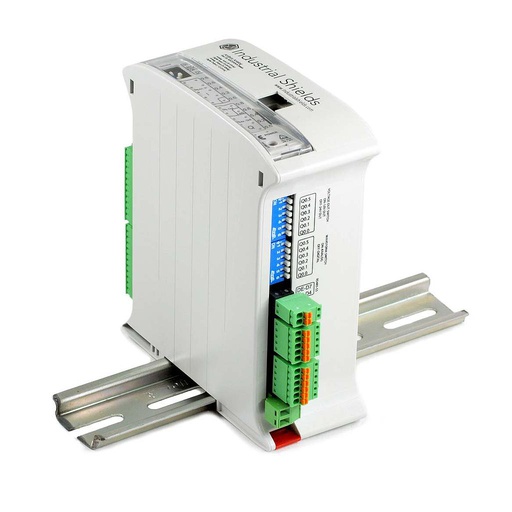
ARDBOX Analog ARDUINO based PLC
A compact industrial PLC built on an original Arduino Leonardo, with 10 inputs and 10 outputs in a 45 mm DIN rail housing. GPRS/GSM is one of the communication versions of the family. On each truck it reads the goods temperature and the position, keeps data on board and sends it to the data centre.
- Role
- Goods temperature, GPS position, local data, GPRS link
- Inputs
- 10: 8 analog/digital (0‑10 V), 2 digital optoisolated
- Outputs
- 10: 7 analog/digital/PWM (0‑10 V), 3 digital optoisolated
- Comms
- RS‑485, RS‑232, TTL serial, I2C, SPI. GPRS/GSM version in the family
- Power supply
- 12 to 24 Vdc
- Mounting
- DIN rail TS35, IP20, 45 mm wide
The case names the "Ardbox Analog GPRS with GPS" from the 20 I/Os family. The image and the link show the ARDBOX Analog ARDUINO based PLC; the GPRS version is in the Ardbox HF+ GPRS family datasheet. The case does not publish the GPS receiver or how it connects.
Questions about this case
How do you monitor the temperature of a refrigerated truck with a PLC?
Put a temperature sensor in the load space and wire it to an input of the controller, often through a transmitter with a 0-10 V or 4-20 mA output. The PLC reads it with the GPS position, saves the data and sends it to a server over a mobile network. In this case, the Ardbox Analog GPRS with GPS did that on every truck of a frozen food fleet. The case does not publish the sensor type.
Did the cold chain hold in the test?
Yes. The first units went into two vehicles with very different routes: a small vehicle (3,500 kg) on a local route with many stops and many trailer openings, and a large vehicle on a long route with only two stops. The cold chain was not threatened in any case. The test ran at the end of summer, when temperatures may not be very severe, and the cold margin was still very wide.
Which rules apply to frozen food transport?
The case speaks about regulations on the cold chain and does not name them. In the EU, quick-frozen food must stay at −18 °C or colder, with short rises of up to 3 °C allowed during transport (Directive 89/108/EEC), and Regulation (EC) No 37/2005 asks for temperature monitoring in transport with recorders that meet EN 12830. Check which rules apply to your load and your country, and whether you need a certified recorder next to the PLC.
Which temperature probe can the Ardbox Analog read, and where does the PLC go?
The Ardbox Analog inputs read 0-10 V. Use a probe with a 0-10 V transmitter, or, for a 4-20 mA transmitter, add a 500 Ω precision resistor and scale the reading in the program. Mount the PLC outside the cold compartment, because it works from 0 to 60 °C, and run only the probe into the load space. The case does not publish the probe it used.
What should a refrigerated truck keep as a temperature record?
The case does not publish its record. A common content: every reading with the time, the load temperature and the position, the door openings, and every alarm with its start and end. Send alarms at once and keep the record until the data centre has it. If the rules ask for a certified temperature recorder, keep it next to the PLC: the PLC adds position, alarms and the link to your software.
Which parts of this case are facts, and which are examples?
Facts: a frozen food company with a growing fleet; GPS positioning and goods temperature as priorities; one standard product for the whole fleet, the Ardbox Analog GPRS with GPS from the 20 I/Os family; data saved locally and most data sent over GPRS to the data centre; a test on two vehicles with different routes; the cold chain was not threatened; quick installation; dashboards in the software of the company. Examples: temperatures, limits, times, the record rate, the record content and the signal list.
Download the case study
4-page PDF with the challenge, the logic, the architecture and the hardware. No form required.
Fleet management cases
Three pages, three angles.
Each page answers a different question. Read the one that matches your project, or all three.
What the GPS data says about routes
Food distribution fleet. Speeds, stops and routes on two very different test routes, and arrivals at large logistics centres.
Read the route caseGoods temperature and position on one unit
Same fleet, other angle. One standard Ardbox unit per truck: GPS, goods temperature, local data and GPRS to the data centre.
You are on this pageGPS, GPRS and Bluetooth on one PLC
A separate case study. How data goes from each truck to a server and to headquarters, and how messages go back to the driver phone.
Read the architecture caseSimilar fleet?
Tell us what you carry and what you must record. An engineer will answer.
Tell us the type of load and its temperature range, how many vehicles you have, which signals you need on board (temperature probes, doors, refrigeration unit), where the data must go, and which mobile networks you have on your routes. We will tell you which controller fits and how to connect it.
- You get an answer from our technical team
- I/O count and controller sizing for your vehicles
- Arduino, ESP32 or Raspberry Pi based PLCs