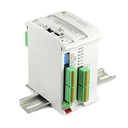
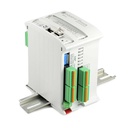
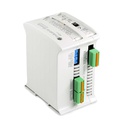
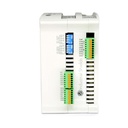
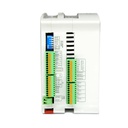
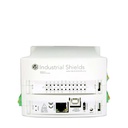
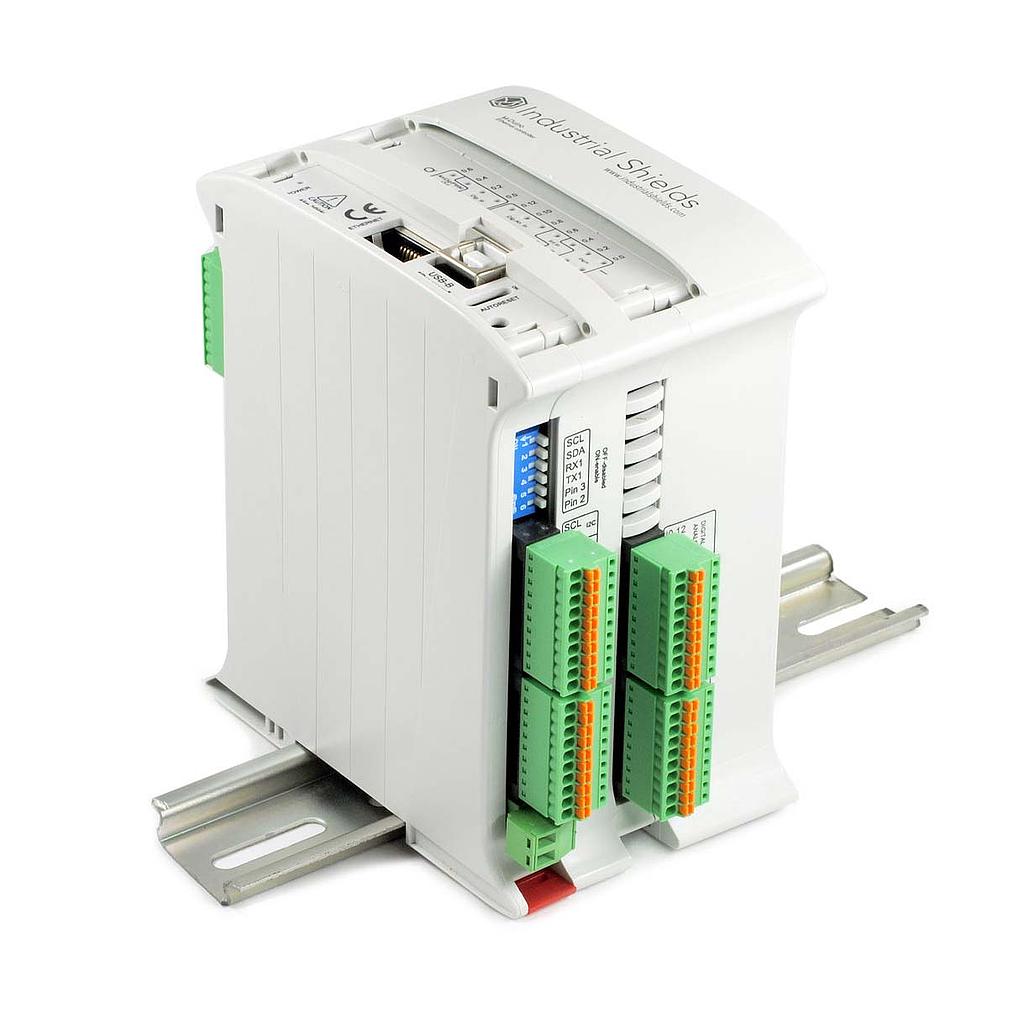
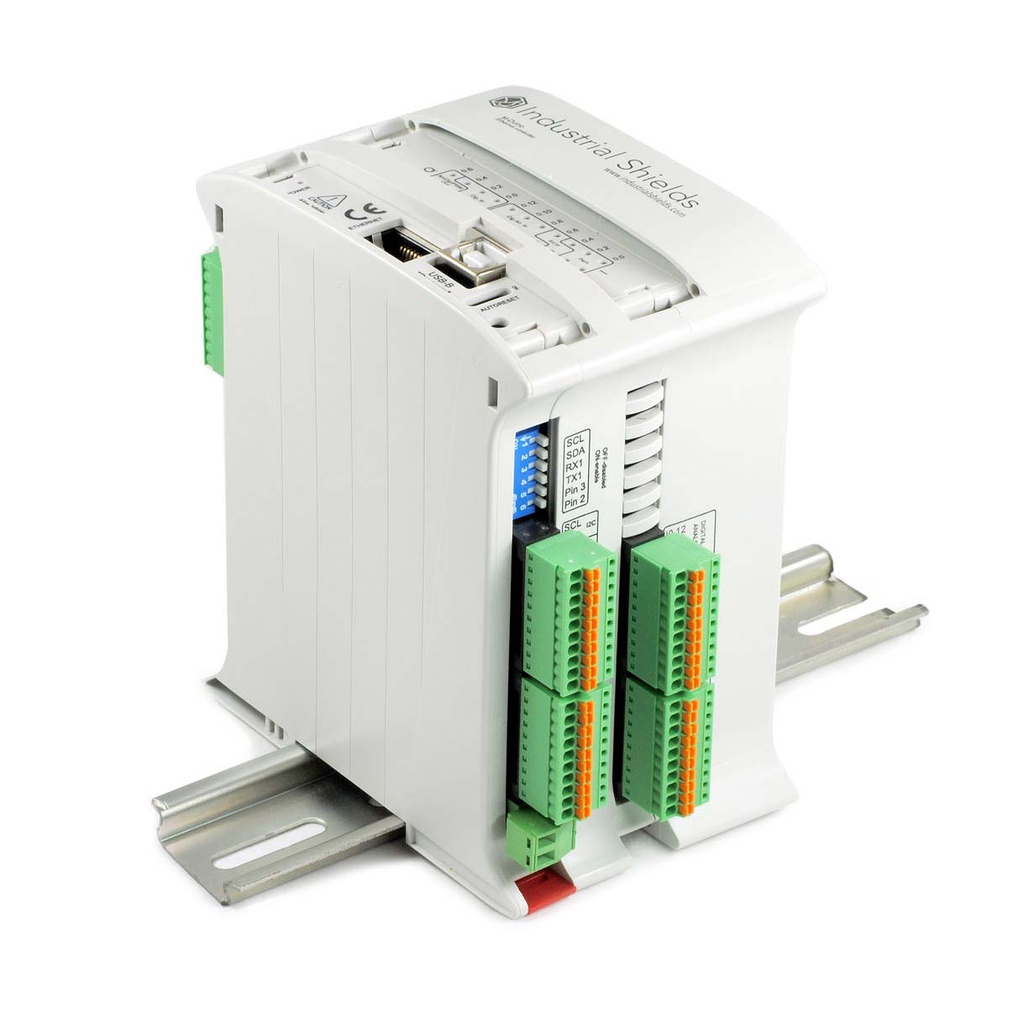
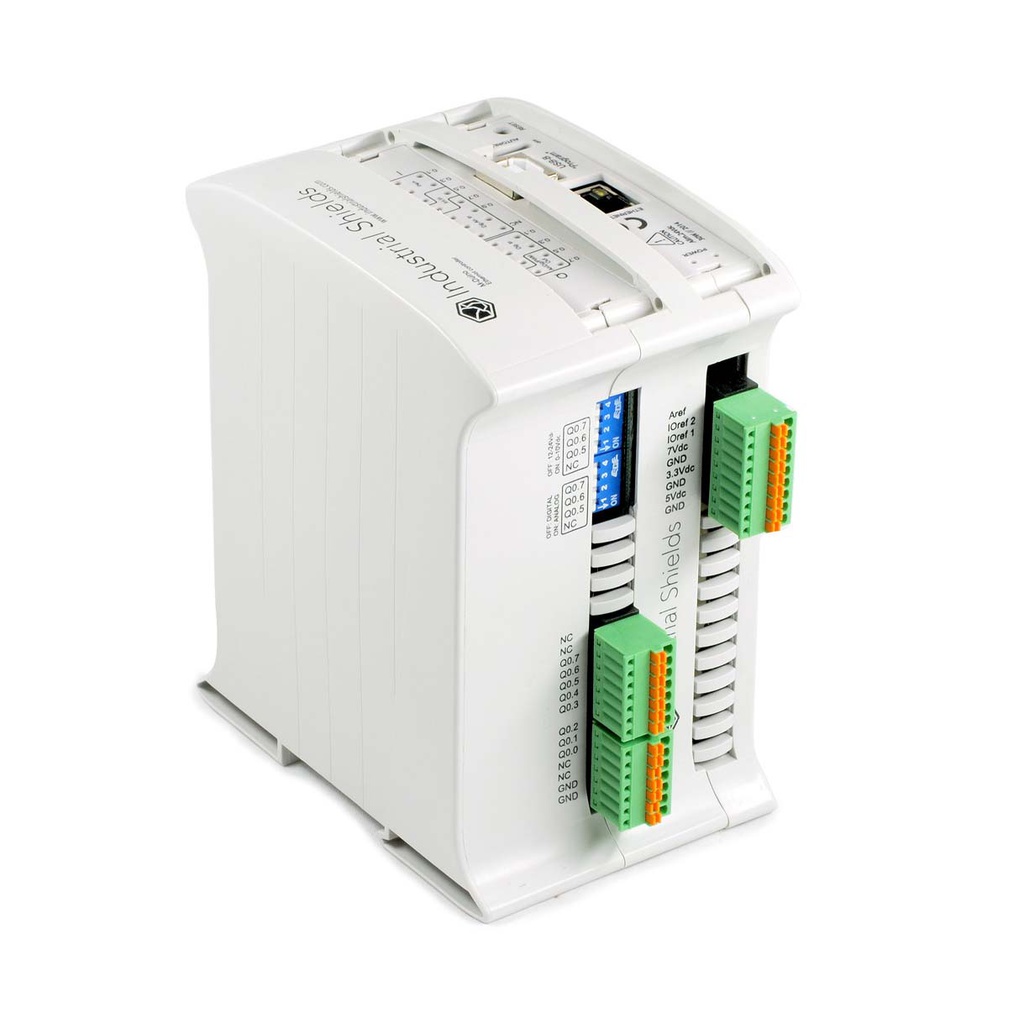
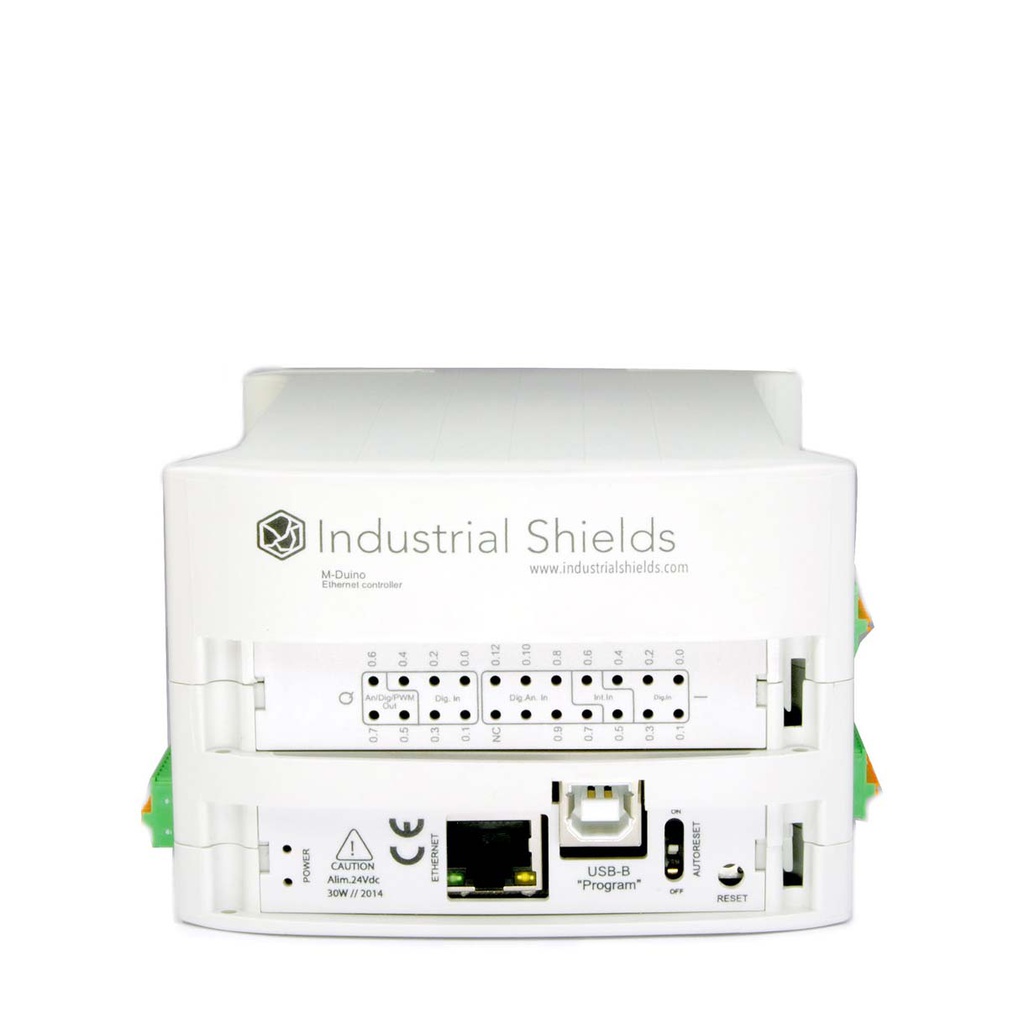
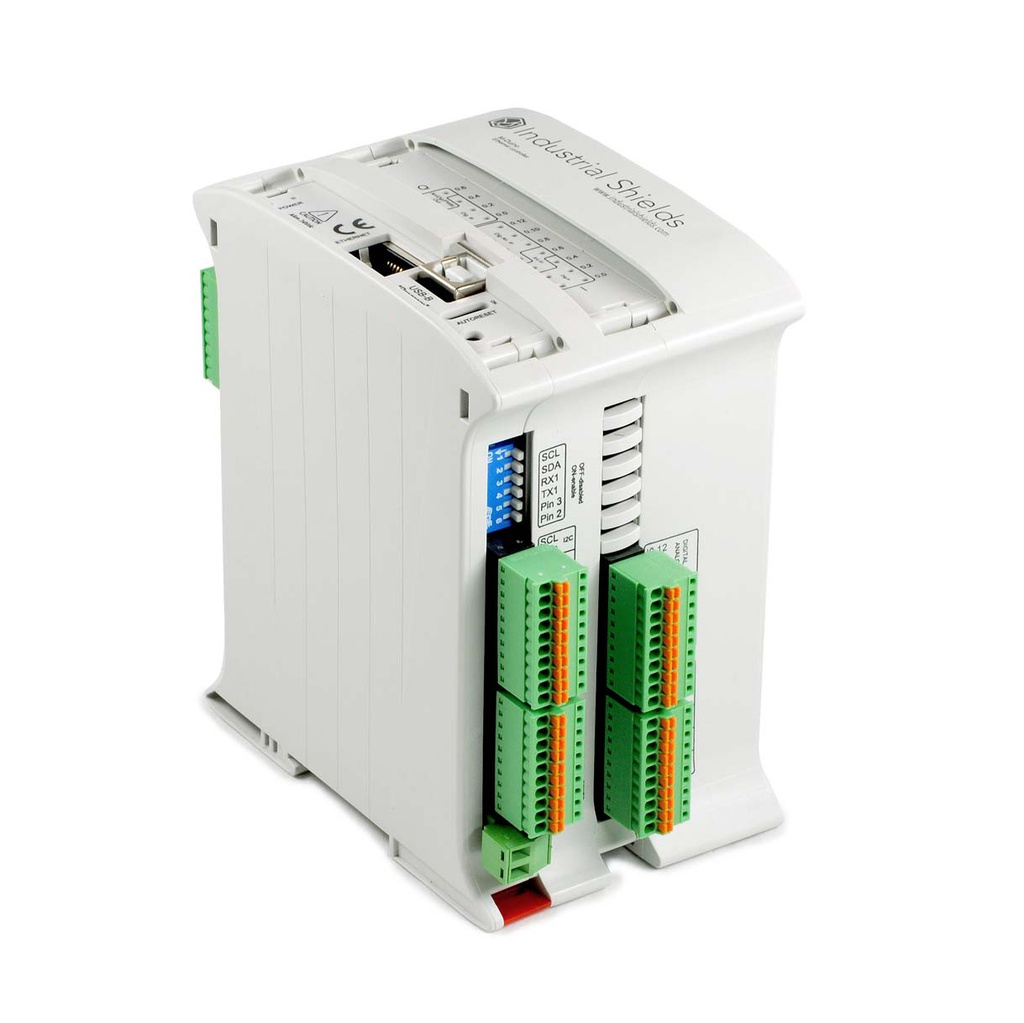
M-Duino 21: Arduino PLC with 21 I/O and Ethernet
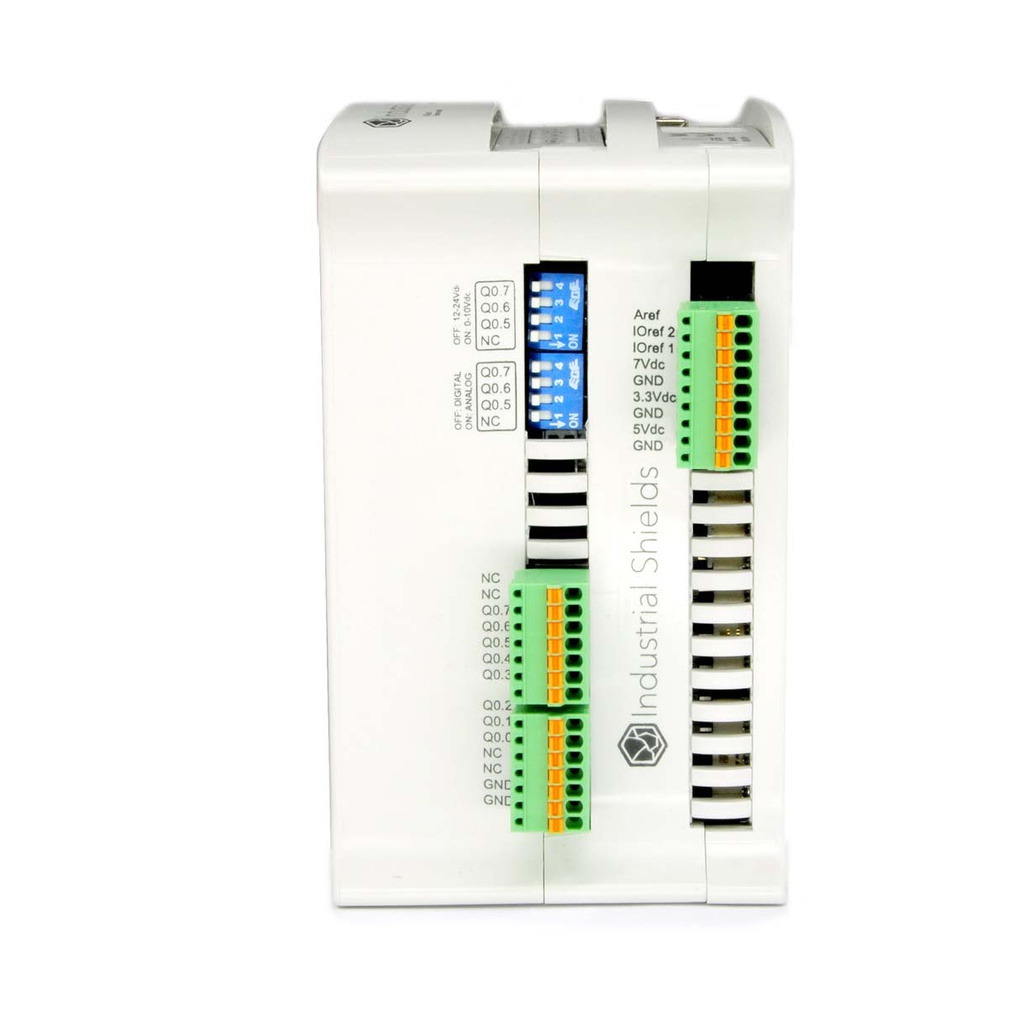
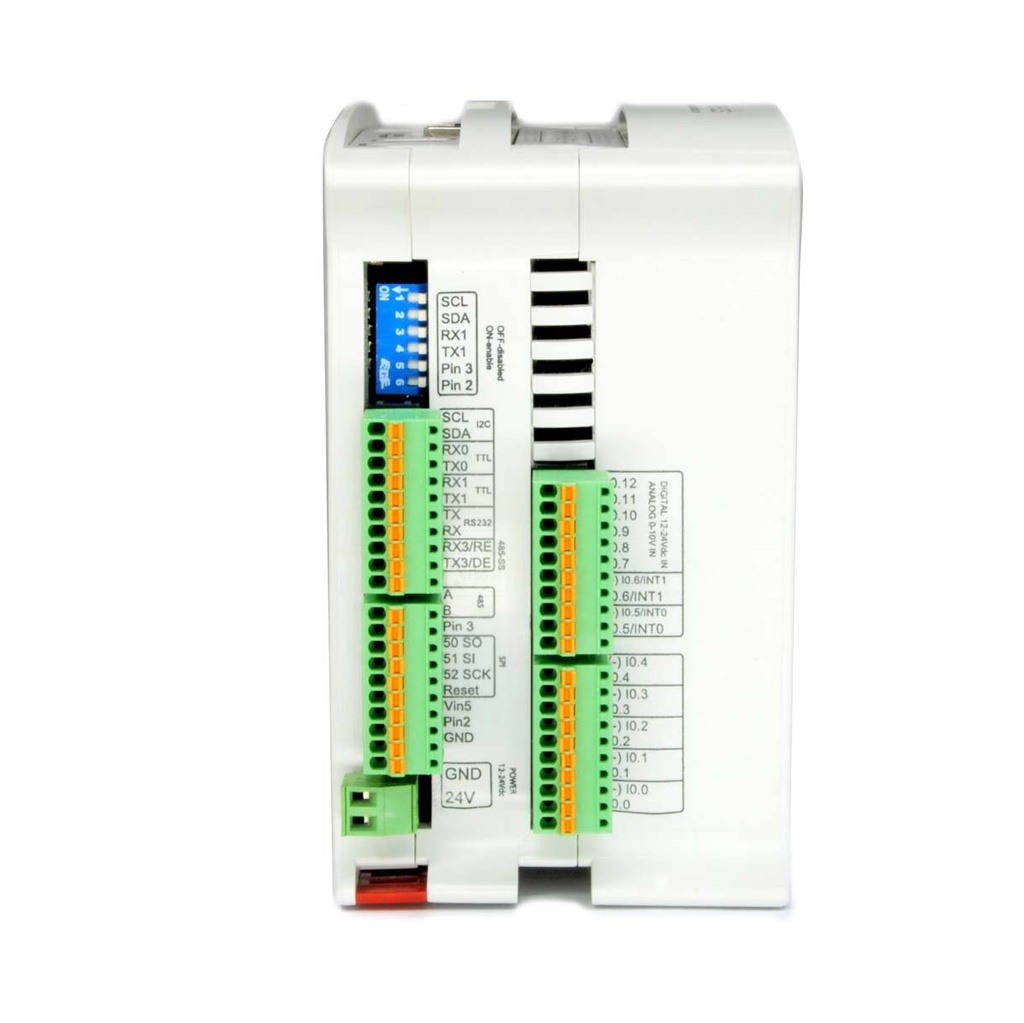
The M-Duino 21 is an industrial PLC from Industrial Shields built around an original Arduino Mega 2560. It has 13 inputs (6 analog 0-10 V) and 8 outputs (3 analog/PWM), Ethernet, RS-485, RS-232, I2C, SPI, a real-time clock and a microSD slot, and mounts on a DIN rail. It is programmed with the Arduino IDE, with no licence fees, and suits monitoring, data acquisition and control panels with analog sensors and digital signals.
Not sure this is the right model? Our engineers help you choose the controller and the options for your project.
Talk to an engineerTechnical specifications
| Microcontroller | Arduino Mega 2560 (ATmega2560, 16 MHz, 256 KB flash, 8 KB SRAM) |
|---|---|
| Inputs | 13: 6 analog/digital (0-10 V, 10-bit) and 7 digital optoisolated, 5 to 24 Vdc, 2 with interrupt |
| Outputs | 8: 3 analog/digital/PWM (0-10 V, 8-bit), 5 digital optoisolated, 5 to 24 Vdc |
| Ethernet | W5500, 10/100 Mbit, RJ45 |
| Serial and buses | RS-485, RS-232, TTL serial, I2C, SPI |
| Built in | Real-time clock, microSD slot, USB 2.0 Type-B |
| Programming | Arduino IDE with the Industrial Shields boards package |
| Power supply | 12 to 24 Vdc, fuse (2.5 A) and polarity protection |
| Environment | 0 to 60 °C operating, 10 to 90 % humidity without condensation |
| Mounting and protection | DIN rail TS35, IP20, inside a cabinet |
| Communication versions | Wi-Fi & BLE, GPRS/GSM, LoRa and DALI versions are described in the family datasheets |
Projects built with Arduino-based PLCs
Field-tested examples with code, built on M-Duino PLCs with the same Arduino IDE environment.
- Modbus flow meter 32-bit counter and remote resetSee the example
- Modbus TCP register map for a plantSee the example
- Modbus TCP to RTU gatewaySee the example
- Modbus RTU drive speed controlSee the example
Before you choose the M-Duino 21
How do I program the M-Duino 21?
With the Arduino IDE (1.8.0 or later). Install the Industrial Shields boards package from the Boards Manager and select the M-Duino 21. Upload through USB; the Ethernet port also lets you maintain it remotely.
Does it have relay outputs?
No. Its outputs are optoisolated digital and analog/PWM outputs. If you need relays, look at the M-Duino models with relay outputs, such as the 19R, 38R or 57R.
Can it talk Modbus?
Yes. Use Modbus RTU over RS-485 and Modbus TCP over Ethernet with the Industrial Shields Arduino libraries. It can act as master or slave.
Can the analog inputs read 4-20 mA sensors?
The analog inputs measure 0-10 V with 10-bit resolution. To read a 4-20 mA loop, add a precision shunt resistor (500 Ω turns 20 mA into 10 V) and scale the reading in your program.
Does it keep the time and log data?
Yes. It has a real-time clock and a microSD slot, so it can timestamp events and log data locally.
More product information
Inputs
6x 10 bit Analog
7x Digital Optoisolated
Outputs
8x Digital Optoisolated
Industrial Communications
I2C, RS232, RS485 SPI, ...
PLC with LoRa connectivity
LoRa (Long Range modulation) is a type of wireless technology. It uses a radio frequency network modulation such as AM, FM or PSK, but this one was created by a major radio chip manufacturer company called Semtech, now managed by LoRa Alliance. This modulation is called CSS (Chirp Spread Spectrum) and has been used in military operations for many years. The benefits of this kind of communication are that it can reach long distances (cover wide areas, usually kilometers) and has good resistance to interferences.
Main advantages
- High tolerance interference
- High Rx sensitivity (-168 dB)
- Based on "chirp" modulation
- Low consumption
- Long range (10-20 km)
- Low data transference (untill 255 bytes)
- Point-to-Point connection
- Low working frequencies: 868 MHz in Europe, 915 Mhz in America and 433 MHz in Asia. It uses the ISM (Industrial, Scientific, Medical) Band which is a non-licensed part of the frequency spectrum)
Possible applications
It is an ideal option when we need long range communication and IoT networks composed of sensors that are not connected to the electrical network due to their locations or main usage. For example, this communication is widely used in Smart Cities or low coverage areas such as agricultural applications or sensors/actuators networks which can take profit of its main characteristics. Because of its advantages and because it is an affordable and easy-to-use technology, it is being applied in many useful applications such as:
- Smart Grid Management
- Logistics and Fleet Management
- Environmental Monitoring
- Industrial IoT
- Smart Cities
Do you want to know more about LoRa? Read the next post 👇
PLC with DALI connectivity
The Digital Addressable Lighting Interface (DALI) is a communication protocol designed to control light and regulate lighting systems. It is based on an electronic system that allows you to talk bi-directionally with the connected devices, sending or receiving information.
It is used to control large lighting systems and regulating their use along with light, motion or timer sensors, allowing an automated control necessary for large buildings and companies interested in industrial automation.
The DALI protocol allows control of a total of 64 devices, interconnected by a DALI Bus. It is used in building automation to control groups of lighting or individual lights. The DALI protocol maximizes flexibility because you can adjust the lights through a software.
DALI controllers can also be used in complete building automation systems using protoccols such as MODBUS, BACnet or KNX.
Why use the DALI communication system in your industrial controller?
The main advantages over its competitors would be ease of planning and installation along with maximum flexibility when making modifications.
Slave devices can be added later and, moreover, do not need to be assigned to an initial configuration at the time of installation, as everything will be controlled digitally. As no special wiring or accessories are required, it makes the DALI protocol quick and easy to implement.
Thanks to the possibility of automatically adjunting the lights, it will be possible to meet time requirements according to energy peaks, sunshine hours or energy rates. The DALI protocol allows the professional control of various environments and configurations such as:
- Switching lights On and Off
- System Automation
- Light intensity regulation
- Control of the system area
Main advantages
- Energy savings and cost reduction:
- Smart lighting usage decreases energy consumption and CO2 emissions.
- Avoid over-lighting by adjusting timing and dimming of luminaires and city lights.
- DALI Arduino controller increases savings by up to 50% per year through precise timing and power control of street lighting.
- Maintenance cost reduction:
- Detailed monitoring and analysis of lighting installation.
- Simplifies maintenance program.
- Security:
- Ensure proper street lighting with DALI Arduino controller for reliable monitoring and control.
- Better control and flexibility:
- Adapt to changing lighting conditions.
- Manage lighting according to specific needs with DALI Arduino PLC.
Do you want to know more about GPRS? Read the next post 👇
PLC with GSM/GPRS connectivity
PLC ideal for remote monitoring, data logging and remote access, diagnostics and control, using short text messages (SMS).
Adjust the messages to send from device with static (text) or dynamic (text and values) content.
According to the needs of your installation this is a perfect way of sending important information to the monitoring center.
You can send to pre-defined phone numbers. SMS messages sending can be triggered by change of binary input state, reaching alarm thresolds, marker state change, counters and clocks.
Remote control unit especially suitable for wireless monitoring & control, data logging and remote access.
Do you want to know more about GPRS? Read the next post 👇
PLC with WiFi & BLE connectivity
Wi-Fi is one of the most important technological developments of the modern age. Similar to other wireless connection types, like Bluetooth, it's a radio transmission technolo-gy that's built upon a set of standards to allow high-speed and secure communications between a wide variety of digital devices, access points and hardware. It makes it possi-ble for Wi-Fi capable devices to access the internet without the need for restrictive wires. It can operate over short and long distances, be locked down and secured, or open and free. It's incredibly versatile and easy to use.
Bluetooth is a another wireless technology standard. Bluetooth was developed as a way to exchange data over a short range. Operates in the 2400-2483.5 MHz range within the ISM 2.4 GHz frequency band. Data is split into packets and exchange through one of 79 designed Bluetooth channels (each of which have 1 MHz in bandwidth).
Our M-Duino family incorporate the ESP32 WiFi/Bluetooth modul.
Do you want to know more about WiFi & BLE? Read the next post 👇
Arduino PLC for Automation, Monitoring and Data Acquisition
The M-DUINO ETHERNET PLC ARDUINO 21 is a compact and reliable controller designed for industrial applications such as automation, monitoring, and data acquisition. It combines the robustness of an industrial device with the simplicity of Arduino IDE programming, making it easy to adapt to energy, water, smart infrastructure, and many other projects.
Inputs and Outputs for Flexible Integration
This PLC provides digital and analog I/Os that simplify the connection of sensors, meters, and external devices. It gives you precise monitoring and control while reducing the complexity of installation.
Standard Industrial Communications
Ethernet and RS-485 (Modbus) come as standard to ensure smooth integration with existing industrial networks. When extra connectivity is required, internal expansion modules extend communication options without adding external hardware.
Simple Programming with Arduino IDE
Based on Arduino Mega, the M-DUINO ETHERNET PLC ARDUINO 21 is programmed using Arduino IDE. Local connection through USB or remote programming via Ethernet means faster setup, easier maintenance, and less downtime.
Benefits for Your Application
- Reliable control and monitoring with flexible I/Os
- Easy integration into industrial networks with Ethernet and RS-485
- Reduced installation time and maintenance costs with intuitive programming
- Scalable solution ready for energy, utilities, and smart infrastructure projects
- Custom developments available through our R&D team for non-standard needs