
Europe's energy sector is being redesigned from the ground up. The combination of decarbonisation targets, the shift to distributed renewable generation, and an accelerating regulatory agenda is forcing every layer of the energy value chain — from grid operators to industrial consumers — to digitalise faster than originally planned. For manufacturers, system integrators, and automation teams working with energy infrastructure or energy-intensive processes, this is not a background policy trend: it is a procurement driver, a compliance deadline, and in many cases, an opportunity.
The regulatory framework driving change
Several EU legislative instruments are now in force or in advanced implementation that directly affect how energy is monitored, managed, and reported across industrial and infrastructure settings.
The Fit for 55 package sets binding targets: at least 55% reduction in net greenhouse gas emissions by 2030 versus 1990 levels, with intermediate milestones that are already affecting energy procurement and efficiency investment decisions. The revised Energy Efficiency Directive (EED), in force since 2023, requires large enterprises to conduct energy audits every four years and establishes mandatory energy management systems for high-consumption sites. The Renewable Energy Directive (RED III) raises the EU-wide renewable energy target to 42.5% by 2030.
REPowerEU, the EU's response to energy supply disruption, has accelerated permitting timelines for renewables and grid infrastructure and increased funding for energy digitalisation projects. The Digitalization of Energy Action Plan specifically targets the data infrastructure layer: interoperability standards, real-time data access, and open digital solutions across the energy system.
Finally, the Corporate Sustainability Reporting Directive (CSRD) — applicable to large companies from 2024 and progressively expanding to mid-size companies — requires detailed energy consumption and emissions reporting. This is the compliance pressure that is translating directly into hardware procurement: companies need measurement infrastructure before they can report.
The smart grid and what it requires from OT
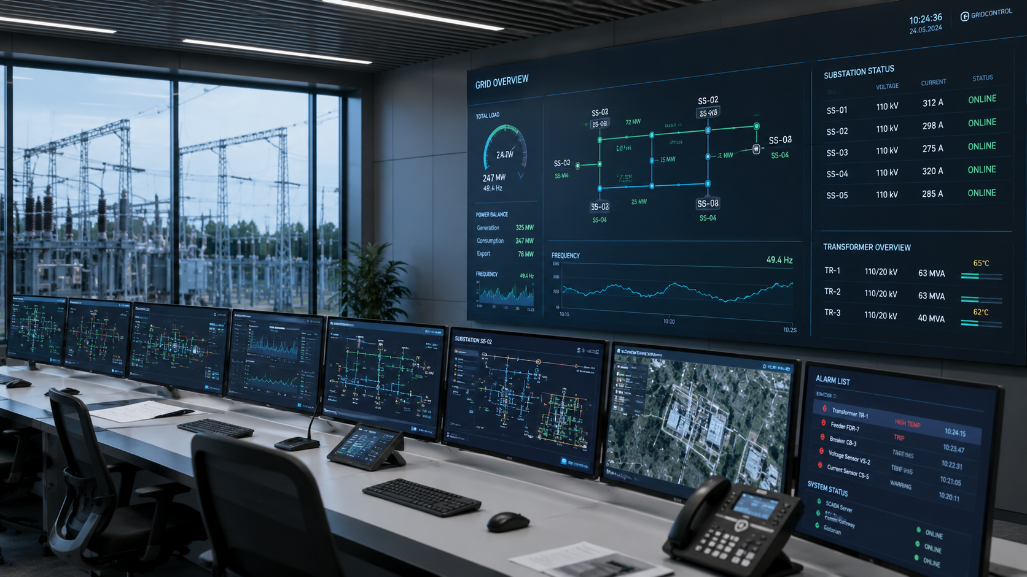
A smart grid is not simply a modernised power network — it is an information system that happens to carry electricity. Distributed renewable generation, bidirectional energy flows, electric vehicle charging loads, and demand-response programmes all require real-time data exchange between the grid operator and every connected asset.
For industrial consumers, this means OT systems must increasingly speak the same data language as the grid. Energy meters, substations, and distributed generation assets need to feed data into centralised management platforms in standardised formats. The protocols being mandated across EU member states — IEC 61850, DLMS/COSEM, and MQTT for IoT-layer connectivity — are the same protocols that modern industrial controllers already support.
The practical implication: organisations that have already deployed IoT-capable industrial hardware for process automation are closer to smart grid compliance than they may realise. The measurement and communication infrastructure is largely the same.
Where automation teams are already delivering value
The sectors most directly affected by the EU energy regulatory agenda — and where automation hardware is already being deployed to meet it — include:
- Solar and wind generation: monitoring of inverter performance, string-level fault detection, and remote control of generation assets. Data acquisition controllers aggregate readings from dozens of inverters and feed them to SCADA systems and energy management platforms.
- Water and wastewater treatment: pump and blower energy optimisation is one of the highest-impact efficiency measures available to water utilities. Real-time monitoring of motor current, flow rates, and energy consumption enables demand scheduling that reduces peak load and energy cost.
- Industrial energy management: CSRD compliance requires granular consumption data per production line or facility zone. Sub-metering with IoT-capable controllers provides the measurement layer needed for mandatory reporting without replacing existing automation infrastructure.
- Building and campus energy systems: heat pumps, battery storage, EV charging, and PV generation all require coordination logic that sits between the building management system and the grid. Programmable controllers running open protocols provide this coordination without vendor lock-in.
Data sovereignty and interoperability
The EU's energy digitalisation framework is explicit on two requirements that have direct implications for hardware and software selection: data sovereignty and interoperability. Energy data — consumption profiles, generation curves, grid state measurements — must remain under the control of the operator and must be accessible to authorised parties through open, standardised interfaces.
This rules out closed, proprietary data platforms as the primary architecture for energy data management and creates a structural advantage for open-source and open-protocol solutions. Operators that build their measurement and control layer on open platforms retain the flexibility to connect to any data marketplace, grid operator interface, or regulatory reporting system as requirements evolve — without renegotiating a vendor contract each time.
Industrial Shields hardware in the energy sector
Industrial Shields Raspberry PLC, ESP32 PLC, and M-Duino controllers are already deployed by clients working in solar generation, water treatment, grid-edge monitoring, and industrial energy management. Built on open-source hardware and firmware, they communicate natively over Modbus RTU and TCP, MQTT, and REST — the protocols used in energy data acquisition and smart grid integration.
For organisations facing CSRD energy reporting requirements or looking to build the measurement infrastructure needed for demand-response participation, IS controllers provide a cost-effective, standards-compliant, and vendor-neutral data acquisition layer. No proprietary runtime, no lock-in, and no facility redesign required — the hardware installs on standard DIN rail alongside existing automation equipment and begins reporting from day one.