
From bottle rejection to full line monitoring: how it started
The best projects often start this way: a specific problem, hardware more than capable of solving it, and an engineer willing to push further.
That is exactly what happened at Bodegas Care, one of the most recognised wineries in the Spanish wine industry, running a bottling line at 3,000 bottles/hour. The starting point was modest: improve a detector to reject uncapped bottles. The chosen fix was to replace old timers and relays with an Industrial Shields ESP32-based PLC. Once installed, the question became inevitable: "Since we're already counting bottles, why not do something more?"
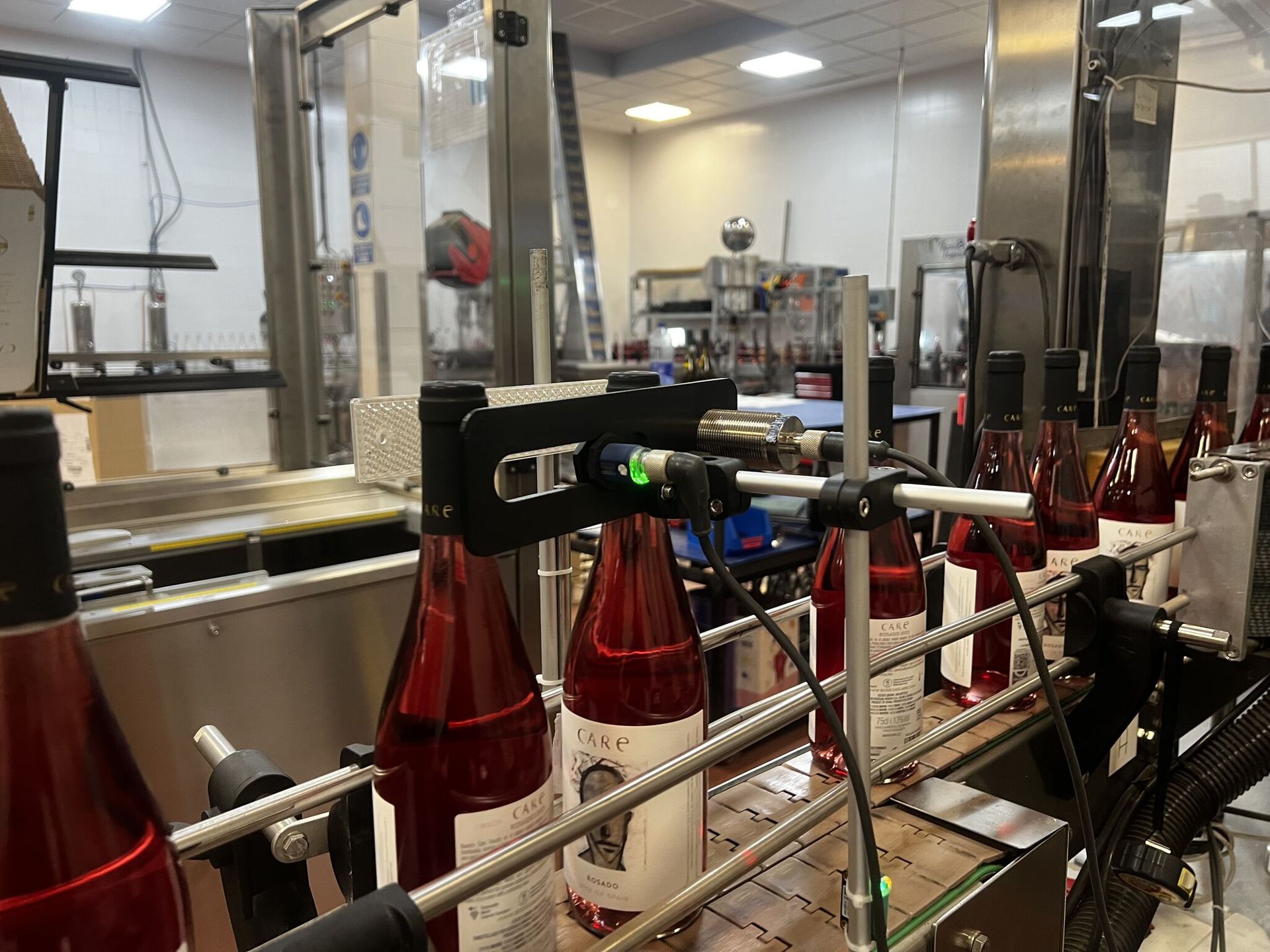
The Care4.0 system: three components, one PLC
What was meant to be a minor upgrade became the Care4.0 project — three components, built incrementally on top of the same hardware:
The ESP32 PLC: rejection control and real-time line metrics
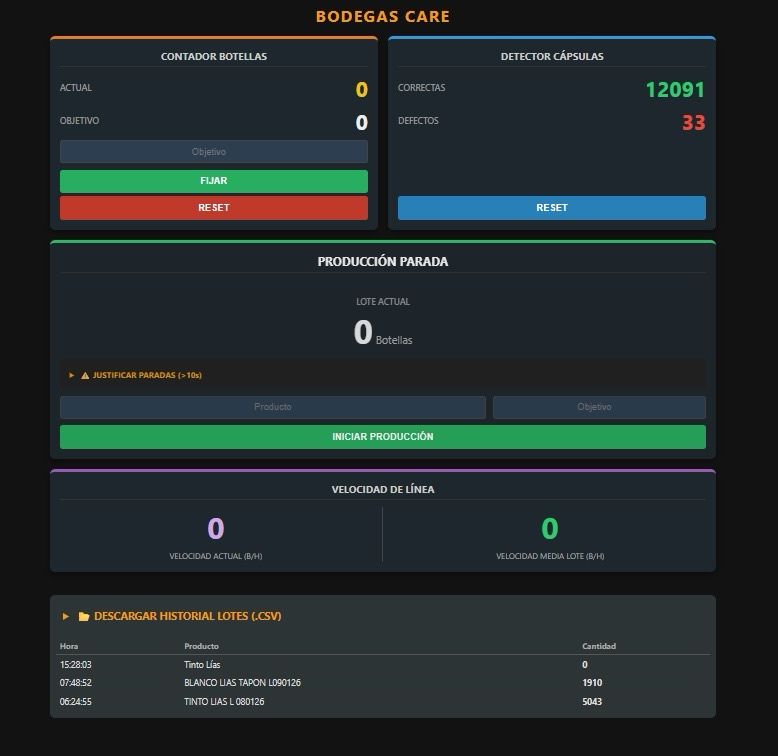
The ESP32 does not just handle bottle rejection — it also calculates line speed and cycle times in real time. With spare I/O available, a second counter was added at the start of the line to track exact lot labeling and prevent overproduction.
Web interface built directly into the PLC
A web interface was programmed directly inside the PLC. No industrial touchscreens, no external software: operators check live data, set production targets and log stoppages from any PC on the company network.
Automatic reporting to Google Sheets by lot and date
All production data is sent automatically to Google Sheets — a complete historical record by lot and product, with no additional servers and no unnecessary complexity.
What this winery automation project proves about ESP32 PLCs
With a standard ESP32-based PLC, some ingenuity and no excessive budget, it is possible to go from a simple rejection control to a real line digitalization system — production counting, lot traceability, operator visibility and automatic historical logging, all integrated in the same hardware.
It is the kind of solution that works well in environments where full automation is not economically viable, but where reliable production data genuinely makes a difference.