

Detecting wood grain angle in 60 timber species: the measurement challenge
In the timber industry, the precise determination of grain angle is crucial for evaluating the mechanical strength and quality of wood materials. A research project focused on analyzing the "tracheid effect" — the scattering of laser light in wood — across 60 commercial species from Malaysia. To carry out this study with scientific rigor, a massive, precise, and highly automated data acquisition system was required.
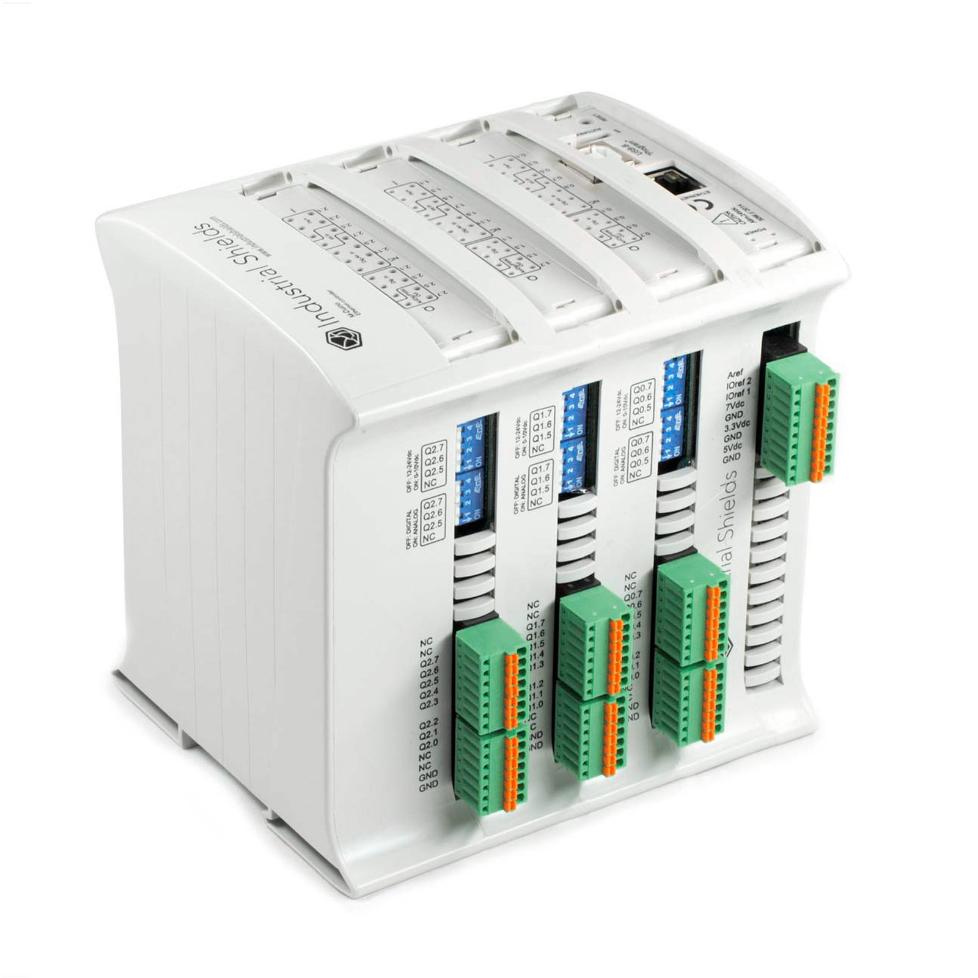
The M-Duino 58 Arduino PLC as the control core
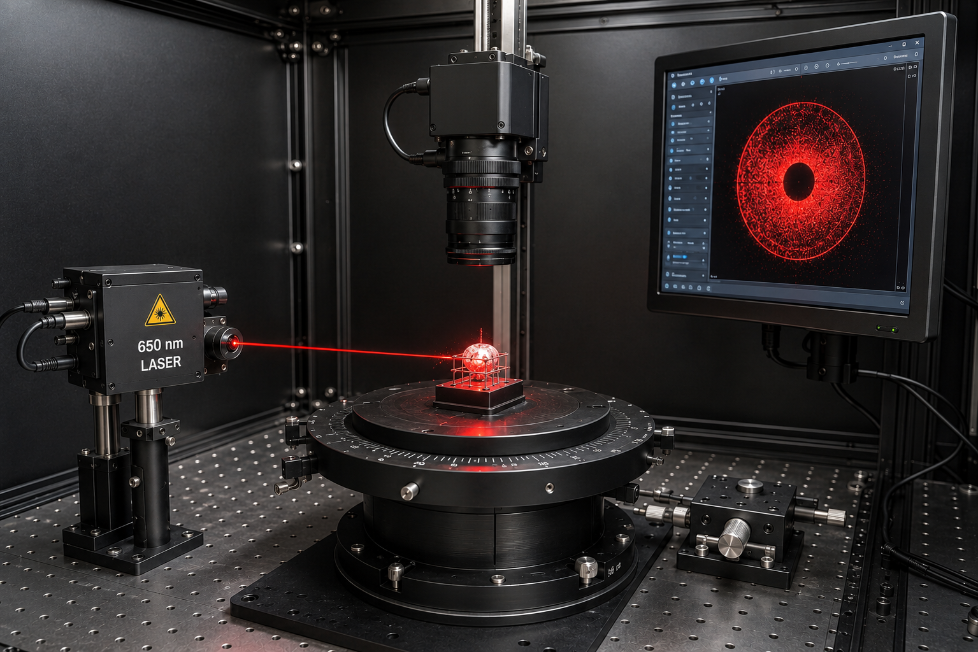
For the hardware configuration of the experiment, a dark chamber was designed where a rotating platform held wood samples under a 650 nm laser and an industrial camera. The key component for automating this movement was an Industrial Shields PLC — the M-Duino 58 Arduino PLC.
The PLC was responsible for controlling a 200-step stepper motor, enabling precise advancement of the rotating platform in exact intervals of 3.6°. This precision is vital, as the study required the capture of 9,000 images per species (1,800 per sample), generating an enormous data volume that can only be managed through reliable industrial control.
Open source hardware in university research: what it enables
The use of Industrial Shields technology, based on the Arduino ecosystem, brought significant advantages to the project:
Integrating custom measurement software via Arduino
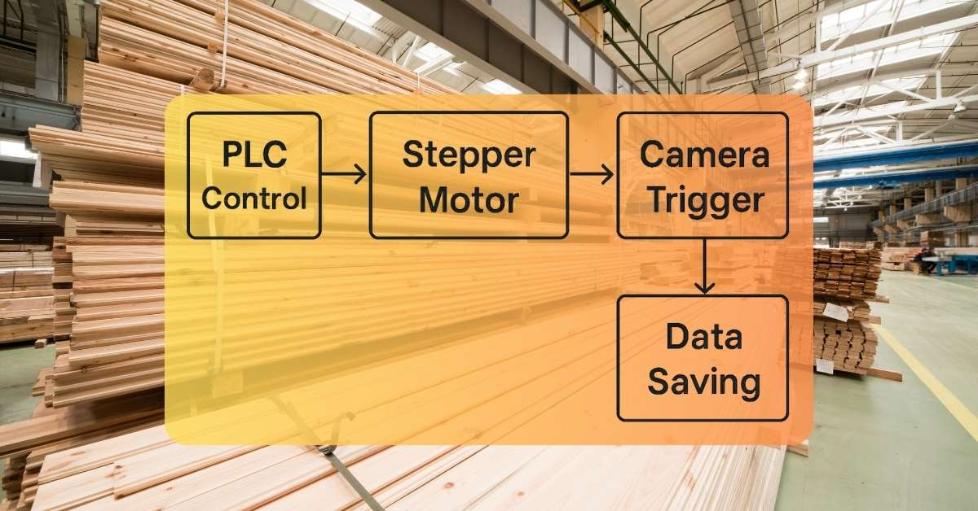
Researchers developed a custom image acquisition software (using Visual Basic) that communicated directly with the PLC to advance the platform, capture the image, and save it automatically. The flexibility of open source facilitates this interoperability between different software platforms.
Adapting the PLC logic as the study evolved
Thanks to the open nature of the PLC, stepper motor control and synchronization with the rest of the system could be programmed in an agile manner, adapting to the specific needs of the experiment — including three revolutions per position and six random sampling points.
Lab precision with industrial-grade hardware
Despite being based on open-source software, the Industrial Shields PLC offers the robustness of industrial-grade equipment, ensuring that the data capture process was not interrupted during the long testing sessions across the 60 analyzed species.
Accuracy results across 60 Malaysian timber species
Thanks to the automation enabled by the PLC, the study successfully concluded that wood color and density directly influence the effectiveness of laser-based grain angle detection. The collected data allowed training of Machine Learning models (such as k-NN and artificial neural networks) with an accuracy of up to 89.3% in predicting detection performance.
Why this approach works beyond the wood industry
This case demonstrates how Industrial Shields PLCs act as a perfect bridge between the world of advanced academic research and industrial reliability. The commitment to open source hardware not only lowers the barriers to entry for customizing complex systems, but also provides a powerful and stable platform for technological innovations that depend on absolute precision and intelligent automation.
Success story: industrial automation and open source in advanced wood research